Different analytes, different information
ctDNA captures tumor-derived molecular material in plasma. Intact circulating tumor cells preserve whole-cell features that can support a different set of research measurements.
Longitudinal viable-cell measurement for translational oncology
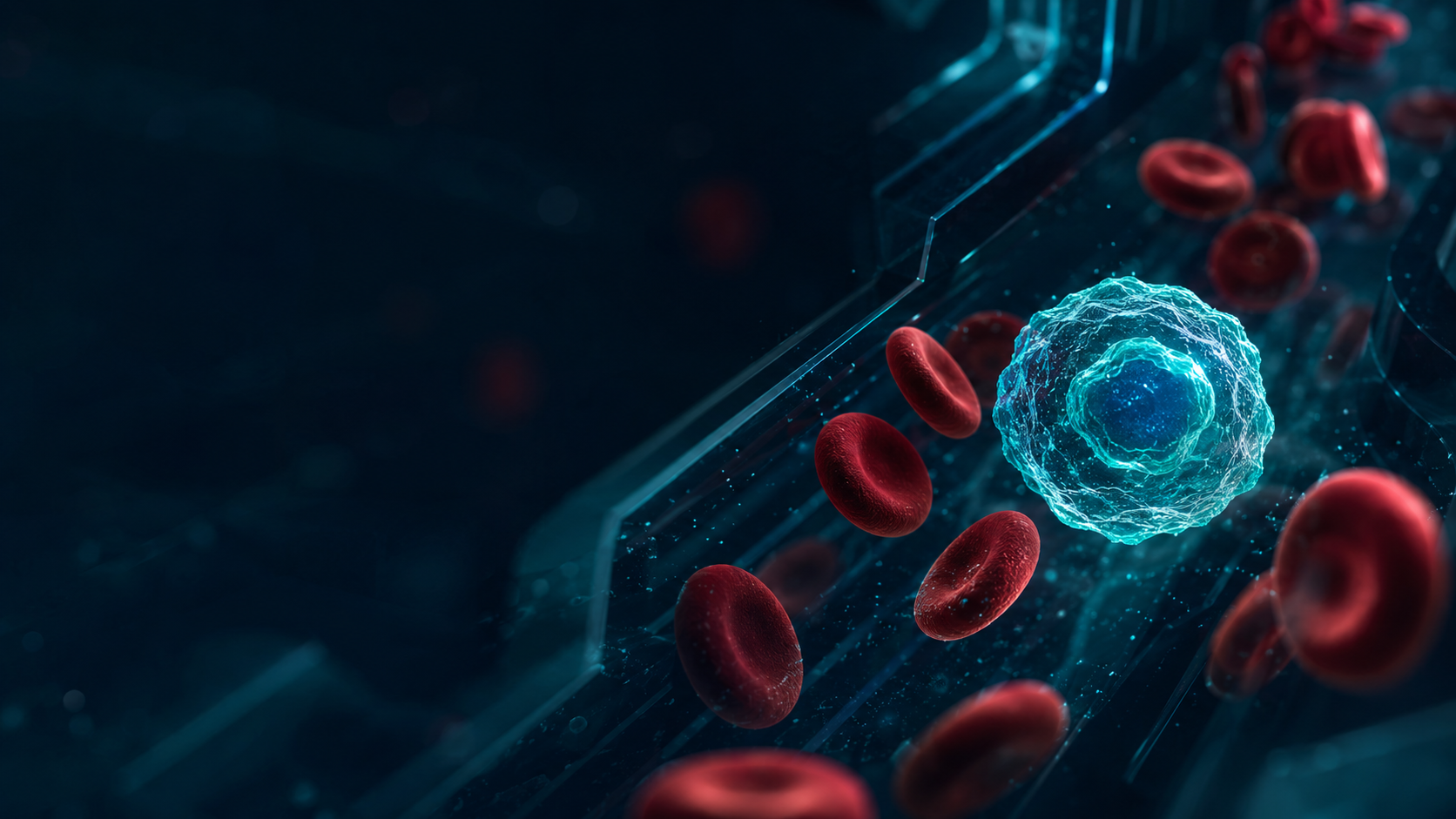
VitraCell is developing Vimeran, a preclinical platform for recovering rare, viable tumor-associated cells from blood while preserving them for downstream measurement and characterization. From there, we are investigating a larger question: does the history of the same living cell contain meaningful information about treatment response that conventional population and endpoint measurements lose?
Preclinical research and development stage. Vimeran is under development and has not been clinically validated. Longitudinal same-cell response measurement remains a research hypothesis. Not intended for diagnosis or treatment selection.
Research hypothesis
The VitraCell thesis in 60 seconds
See how Vimeran™ and the ΔSR research framework connect viable circulating tumor cells, controlled therapeutic perturbation and complementary molecular context—without assuming the answer before the evidence exists.
Preclinical research platform under development. Vimeran™ and ΔSR have not been clinically validated and are not intended for diagnosis or treatment selection.
The translational gap
Translational medicine and oncology biomarker teams increasingly use ctDNA and liquid biopsy to study tumor-derived molecular signals in blood. A complementary viable-CTC layer could support different research questions that require intact cells, including phenotype, heterogeneity, treatment-resistance biology and downstream cell-based characterization.
ctDNA captures tumor-derived molecular material in plasma. Intact circulating tumor cells preserve whole-cell features that can support a different set of research measurements.
Questions involving cell morphology, biophysical phenotype, recovery or controlled ex vivo perturbation cannot be answered from cell-free DNA alone.
VitraCell's research hypothesis is that viable-cell data may add biological context when analyzed alongside ctDNA and other translational study endpoints.
Vimeran viable-cell recovery platform
Vimeran is being developed to address the front end of the problem: recovering rare, viable tumor-associated cells from blood while preserving them for what comes next. The intended output is a recoverable population of viable rare cells suitable for downstream measurement and characterization.

The evidence program
The near-term objective is to establish viable-cell recovery, background depletion, post-processing viability and reproducible characterization. In parallel, VitraCell is investigating whether preserving the identity of the same viable cell across baseline measurement, controlled therapeutic perturbation and repeated early measurements reveals information associated with established downstream biological endpoints.
Build the repeatable isolation and characterization foundation required before functional testing of rare patient-derived cells is credible.
VitraCell is testing whether repeated measurements of the same viable tumor cell before and after controlled therapeutic perturbation contain biologically relevant response information that is lost or degraded when different cells are measured at different time points. This is a hypothesis to be tested, not a validated drug-response assay.
The science behind the hypothesis
Independent research supports several premises behind VitraCell's development program: viable CTCs can support functional study; intact cells provide information that cell-free analytes cannot preserve; and therapeutic perturbation can produce measurable electrical and mechanical state changes at the single-cell level. These findings establish scientific plausibility—not validation of Vimeran™ or ΔSR.
Peer-reviewed work has described viable CTC enrichment, culture and functional investigation, including drug-screening applications. The scarcity of CTCs remains a major technical constraint.
Pantel & Alix-Panabières, Clinical Chemistry →Recent reviews distinguish viable CTCs from ctDNA because intact cells retain phenotypic and functional information, supporting their study as a complementary liquid-biopsy analyte.
Recent CTC precision-oncology review →Single-cell impedance studies have detected heterogeneous drug-associated electrical responses, including signals observed before overt phenotypic change in experimental cancer-cell systems.
Chemical Science single-cell study →Recent work continues to document drug-induced mechanical and electrical state transitions in tumor cells. What remains unproven is whether an early, reproducible trajectory in rare viable patient-derived tumor cells provides useful nonredundant information alongside established endpoints. That is the question ΔSR is intended to test.
2026 mechanophenotype study →Evidence boundary: the cited studies were performed using their own platforms, models and experimental conditions. They do not validate Vimeran™, establish ΔSR performance, or demonstrate clinical utility.
Translational oncology development partners
VitraCell is interested in working with translational oncology researchers, drug-development teams, patient-derived model and organoid researchers, CROs and biomarker groups to test whether early longitudinal changes in viable tumor cells relate to established biological response endpoints.
Start with the sponsor's actual development question, sample constraint and required evidence—not a generic technology demonstration.
Agree on models, compounds, controls, exposure conditions, molecular markers and acceptance criteria before work begins.
Establish repeatability and the relevant response signal in controlled material before advancing to scarce patient-derived samples.
Execute a defined feasibility study with a research report, transparent limitations and a clear go-or-stop decision.
Best initial fit
The initial study model is deliberately narrow: define the biological question together, select an appropriate model and perturbation, establish early measurement time points and trusted downstream endpoints, then determine whether the longitudinal signal is worth pursuing further.
Built through collaboration
VitraCell's viable-CTC development program is supported by academic engineering and clinical-oncology relationships in South Carolina. Those relationships support the present feasibility pathway; any paired ctDNA/viable-cell translational study will require its own defined scope, endpoints, approvals and agreements.

The company
VitraCell was founded by Gregory Moore to address a practical gap in precision oncology: ctDNA can provide powerful molecular information, but cell-free DNA does not preserve a living tumor cell for phenotypic study, recovery or downstream cell-based research.
The company is developing Vimeran for viable rare-cell recovery and identity preservation. Vimeran addresses the cell-acquisition problem. VitraCell’s broader research asks what can be learned when the identity of the same living cell is maintained across baseline measurement, controlled perturbation, repeated measurement and downstream characterization. That longitudinal hypothesis remains to be tested, and every broader claim remains gated by evidence.
From viable-cell recovery to cell history